How to Choose the Best Food Packaging for Your Products?
Choosing the best Food Packaging for your products is critical in today's market. With the global food packaging industry projected to reach $600 billion by 2025, the stakes are high. Effective packaging preserves food quality and enhances brand visibility. The right choice can significantly reduce waste and boost sales.
Many companies struggle with selecting suitable materials. Options abound, yet not all are eco-friendly or cost-effective. Recent studies indicate that sustainable packaging solutions are preferred by 74% of consumers. However, transitioning to these materials may pose challenges and require reevaluation of existing practices.
As seen in industry trends, integrating advanced technologies like AI in packaging processes can optimize efficiency. The 2026 Canton Fair highlighted AI's role in enhancing supplier selection, emphasizing innovative approaches. Businesses must reflect on their packaging choices, ensuring compliance with certifications like ISO and CE. Smart, thoughtful packaging decisions can lead to substantial benefits in quality, sustainability, and customer satisfaction.
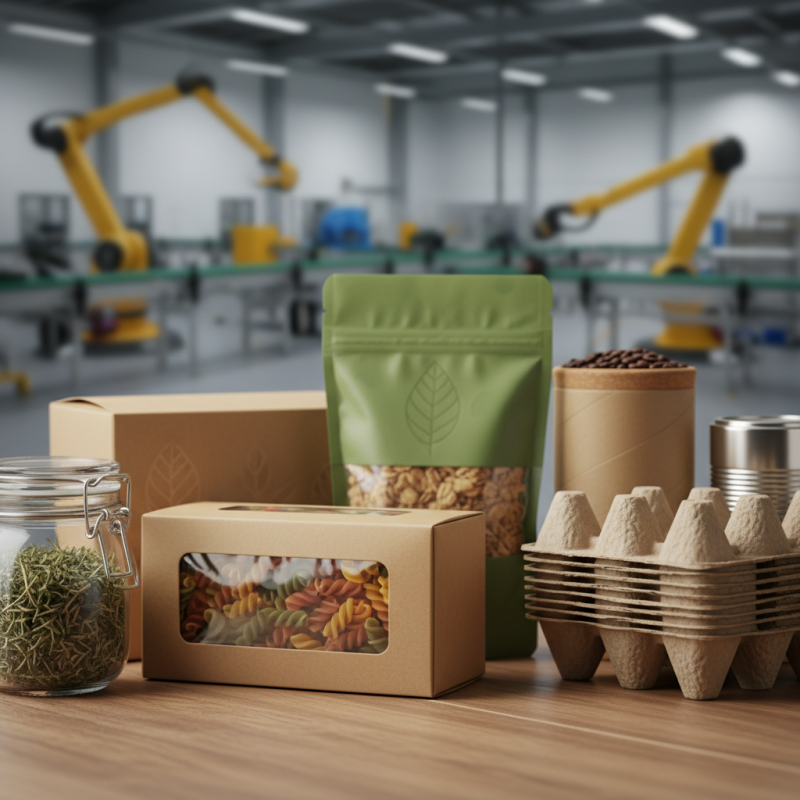
Understanding the Role of Food Packaging in Product Shelf Life
Food packaging plays a crucial role in determining how long a product can remain fresh. It protects food from external elements, like moisture and light. The right packaging can significantly extend shelf life, preserving taste and nutrition. Choosing materials that block out light or air can make a big difference. For example, vacuum-sealed bags work well for dry goods.
However, not all packaging is created equal. Some materials can leach harmful substances into food if misused. It’s essential to consider the end-use of the packaging, including waste management options. Eco-friendly choices may not always be the best for food preservation. The industry lacks standardization in this area. A package that looks appealing may not offer optimal protection.
It’s also worth mentioning the impact of packaging on consumer perception. Attractive packaging can lure buyers. But if the food spoils quickly, it can lead to dissatisfaction. Companies must strike a balance between aesthetics and functionality. Researching and testing different options is necessary to find the ideal solution. This process can be trial and error, and sometimes the results are unexpected.
How to Choose the Best Food Packaging for Your Products? - Understanding the Role of Food Packaging in Product Shelf Life
| Packaging Type |
Material |
Impact on Shelf Life |
Cost Range |
Environmental Impact |
| Plastic Containers |
Polyethylene |
Moderate - offers good moisture resistance |
$0.05 - $0.50 each |
High, not biodegradable |
| Glass Jars |
Glass |
High - excellent barrier properties |
$1.00 - $3.00 each |
Low, fully recyclable |
| Cardboard Boxes |
Recycled Paperboard |
Moderate - good for dry products |
$0.10 - $1.00 each |
Low, easily recyclable |
| Vacuum Sealed Pouches |
Multi-layer Plastic |
Very High - extends shelf life |
$0.20 - $1.00 each |
Medium, depends on material |
| Tin Cans |
Tinplate |
High - ideal for wet products |
$0.30 - $1.50 each |
Low, recyclable |
Exploring Different Types of Food Packaging Materials and Their Benefits
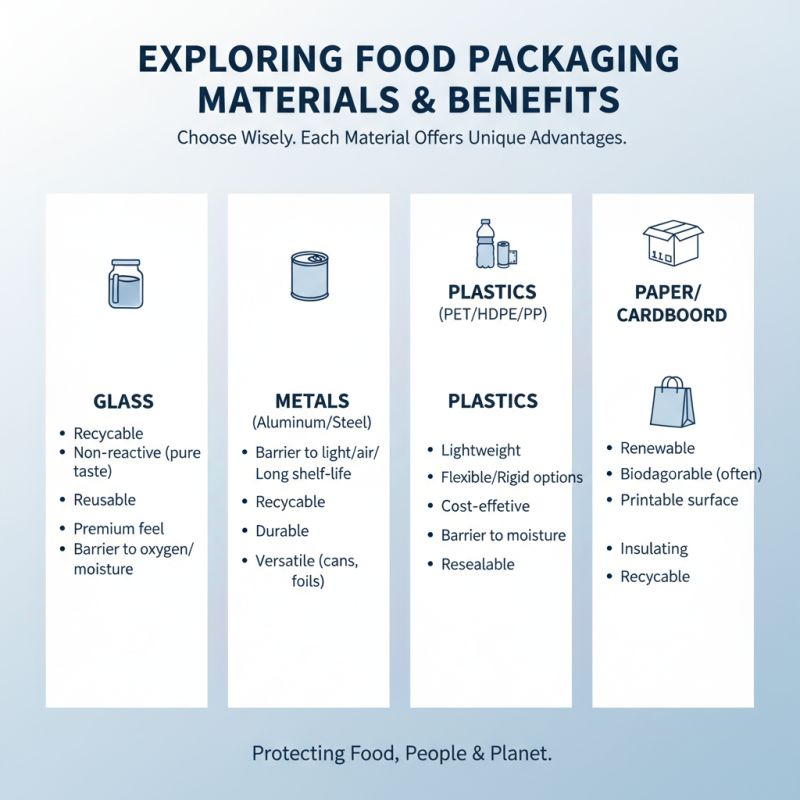
Choosing the right food packaging is vital. Many options are available today. Each material comes with its own benefits.
Plastic is commonly used. It is lightweight and cheap. However, concern over environmental impact grows. Studies show that plastic waste can take hundreds of years to decompose. Aim for recyclable plastics where possible. Rigid plastics, like PET, can extend shelf life and maintain product quality. But, they can also be less sustainable.
Paper and cardboard are eco-friendly choices. They are biodegradable and recyclable. In 2022, the global market for paper packaging was valued at over $400 billion and is expected to grow. Yet, paper can struggle against moisture. Consider using barrier liners to combat this issue.
Tip: Evaluate the trade-offs of each material. Consider costs, sustainability, and the needs of your product. Don't settle for the easiest option. Engage consumers with responsible choices. They think more about how their products are packaged.
Evaluating Sustainability in Food Packaging Choices for Eco-Friendly Products
Evaluating sustainability in food packaging is essential for eco-friendly products. The global food packaging market is projected to reach $500 billion by 2028, and consumers increasingly demand sustainable options. According to a 2021 report, 74% of consumers are willing to pay more for sustainable packaging. This reveals a significant market shift towards greener choices.
When choosing packaging, look for materials that are recyclable or biodegradable. Paper and cardboard are preferable, as they have lower carbon footprints compared to plastic. Consider the entire lifecycle of the packaging. Production, transportation, and disposal all affect sustainability. In fact, plastic accounts for nearly 70% of all food packaging waste. Opting for reusable packaging can reduce waste significantly.
Tip: Research local recycling programs. Knowing which materials your local facility accepts can guide your packaging choices.
Remember, not all eco-friendly claims are valid. Some products use misleading labels. Always verify
certifications and research companies’ sustainability practices. This step is crucial in making an informed choice that truly benefits the environment.
Tip: Engage with customers about your packaging choices. Their feedback can offer insights and help improve sustainability efforts.
Analyzing Consumer Preferences for Packaging Design and Functionality
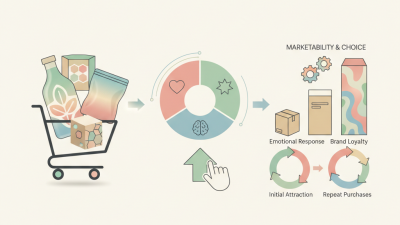
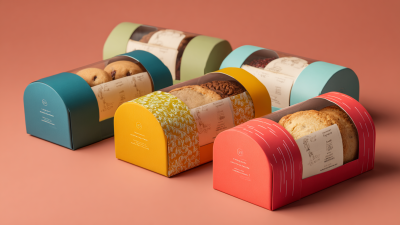
When selecting food packaging, understanding consumer preferences is crucial. Many consumers are drawn to packages that are visually appealing. Bright colors and creative designs often catch the eye. However, functionality should not be overlooked. Packaging must keep food fresh and safe. Aesthetics can sometimes come at a cost to practicality, leading to potential waste.
Sustainable packaging is increasingly important to consumers. They prefer eco-friendly materials that reduce environmental impact. Yet, the balance between sustainability and cost can be tricky. Some businesses might cut corners. This can lead to poor quality packaging that harms the product. Testing various options can be time-consuming. But ignoring genuine feedback may result in missed opportunities.
Convenient features also matter. Resalable packaging or easy-open designs are often favored. Yet, these features can increase production costs. Some products still come in difficult-to-open packages. This may frustrate buyers. In reflecting on consumer feedback, it’s essential to consider both form and function. Overlooking one can jeopardize customer satisfaction. Balancing these factors is an ongoing challenge for food producers.
Regulatory Standards Impacting Food Packaging Selection and Compliance
When selecting food packaging, regulatory standards are paramount. Different regions enforce various rules to ensure safety and consumer protection. These regulations dictate materials, labeling, and overall design. For instance, certain plastics might be deemed unsafe for food contact, limiting options for manufacturers. It's crucial to stay updated on these standards, as they can change often.
Compliance goes beyond simply meeting regulations. Packaging must also be functional. Considerations include durability, moisture resistance, and temperature control. Many companies overlook these aspects, which can lead to spoilage or waste. Packaging that fails to protect food quality can damage brand reputation. It’s worth reflecting on how packaging choices directly affect customer satisfaction.
Additionally, sustainability is increasingly important. Many regulations promote eco-friendly materials. Some businesses struggle to balance compliance with environmentally conscious choices. Opting for biodegradable alternatives might conflict with certain safety standards. Finding the right balance can be tricky and requires continuous evaluation of both regulations and market expectations. Each decision made in packaging impacts not just compliance but also brand identity and public perception.